When customers reorder a seal brush for an energy recovery wheel, they need the new batch to fit the same mounting arrangement. At BaJie Brush, our pre-shipment inspection starts with the drawing for the ordered profile. We also check bristle retention, flexibility, surface water repellency, and packed roll weight to help maintain consistency from batch to batch.
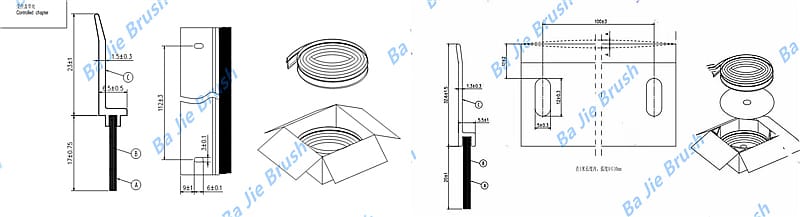
1. Checking Dimensions Against the Type E and Type F Drawings
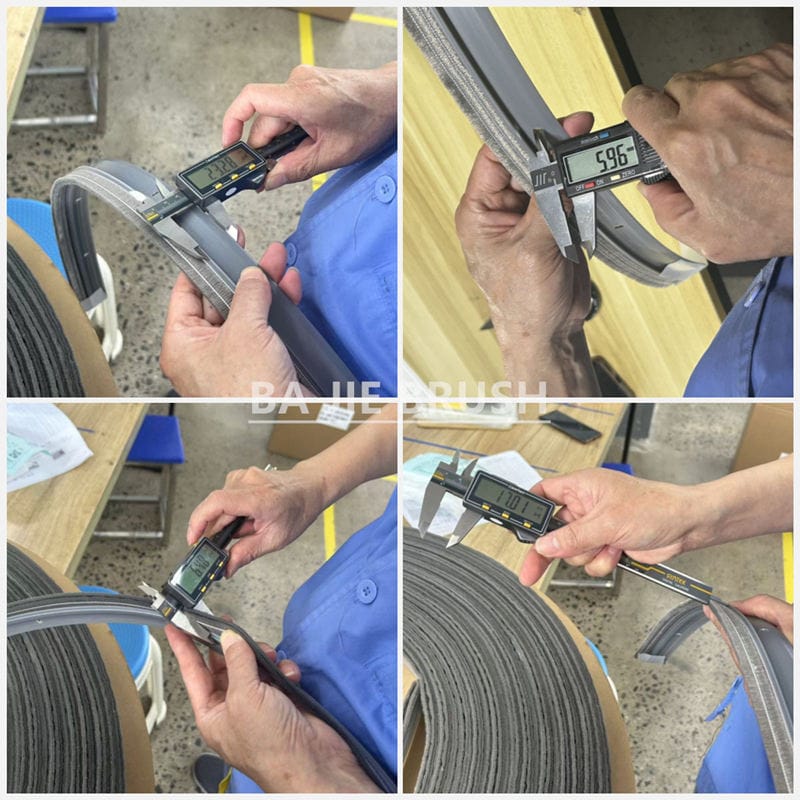
We supply this seal brush in two profiles: Type E and Type F. Each has its own drawing and tolerances. During inspection, we check the finished brush against the drawing for the type ordered, using digital calipers to measure key profile dimensions and checking the mounting slots against the specified size and spacing.
For example, the drawing specifies a mounting slot spacing of 112 ± 3 mm for Type E and 100 ± 3 mm for Type F. The spacing is just one of the dimensions we check; the drawing also defines the profile dimensions and slot sizes for each type.
2. Checking Flexibility of the Finished Brush
We bend the assembled brush to see how the backing and bristle strip flex together. This check is relevant to how the finished strip follows the curve of the wheel during installation.
3. Checking Bristle Retention
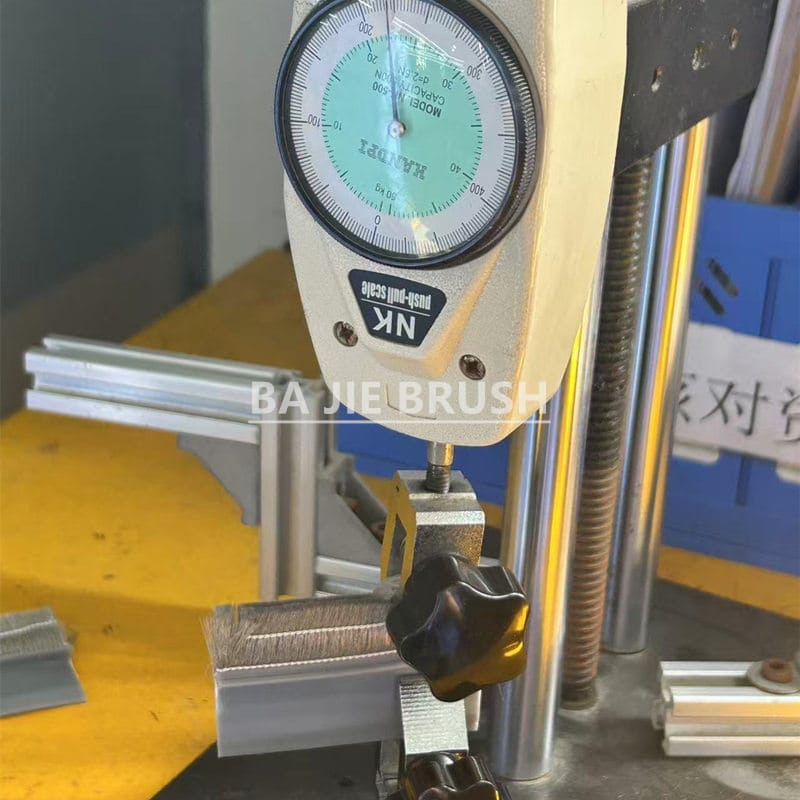
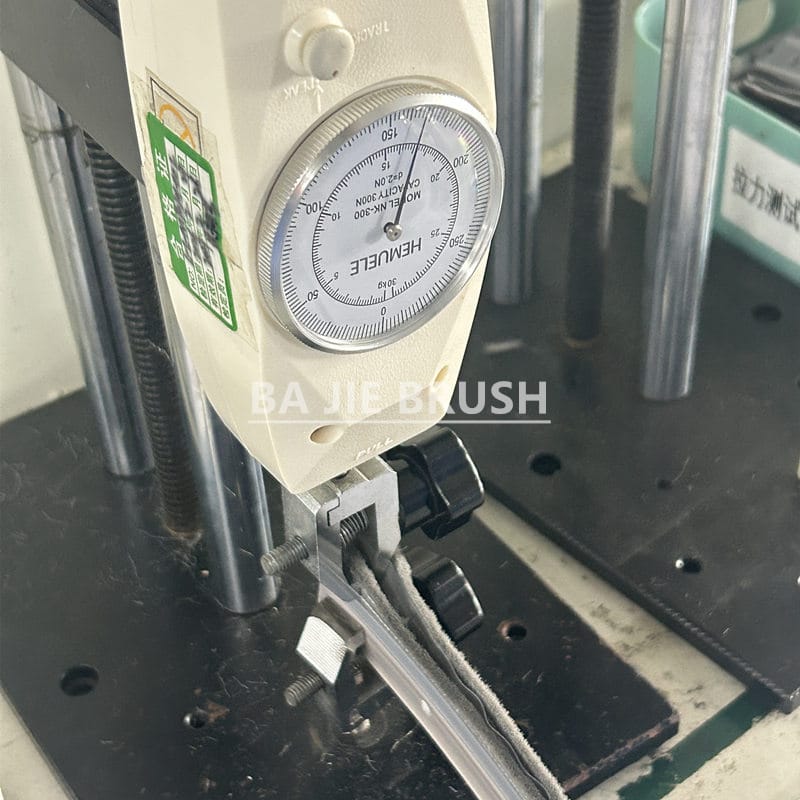
We clamp a section of the finished brush and use a force gauge to apply a pull to the bristles. This checks how securely the bristles are held in the backing and helps identify loose bristles before shipment.
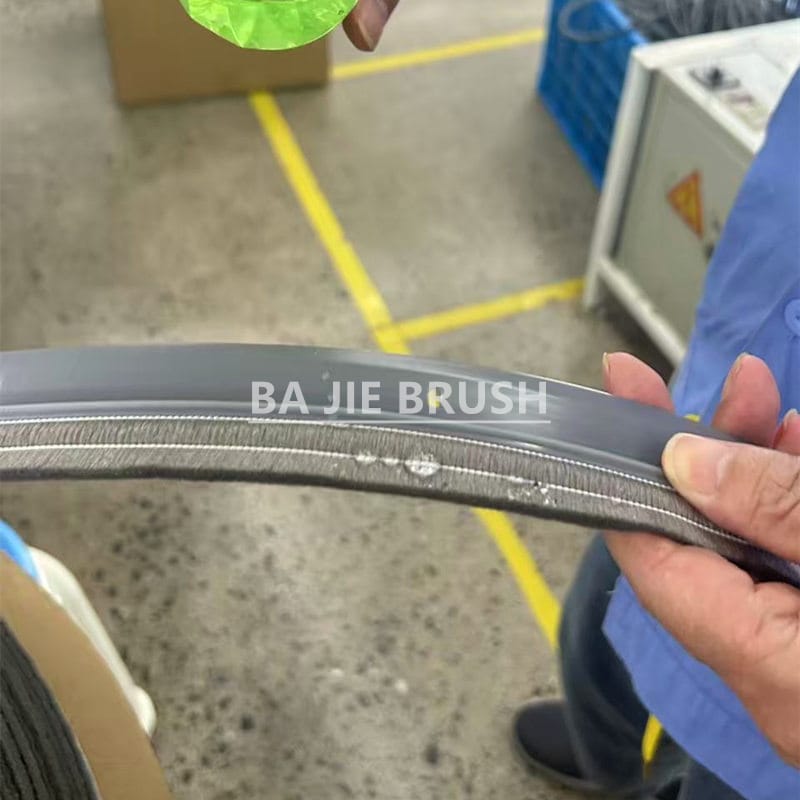
4. Checking Surface Water Repellency
We apply water to the brush face and observe whether it beads on the surface. This is a visual check of the brush face under direct water contact.
5. Weighing the Packed Rolls
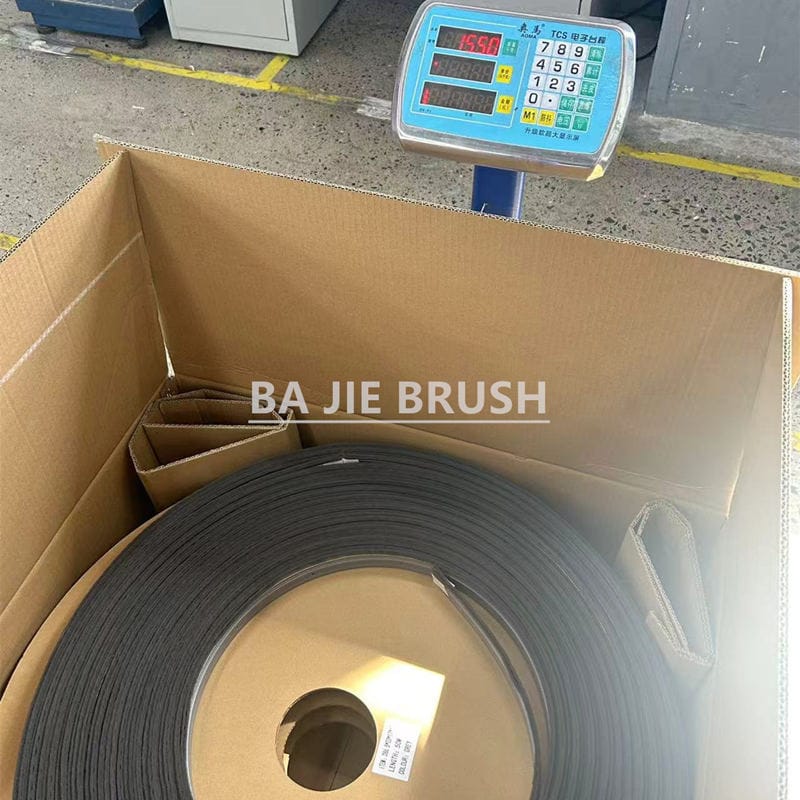
We weigh the packed brush rolls on a platform scale before dispatch to check the shipment weight.
Choosing the Right Profile for Your Wheel
If you are replacing an existing seal brush, send us a drawing or a photo showing the cross-section and mounting slots. These details help us identify which profile matches your application. For more product details, see our rotary heat exchanger seal brush.