Product Overview
The nylon bristle door bottom sweep is designed to close gaps beneath commercial and industrial doors while allowing the door to move freely. Flexible nylon filaments maintain contact with the floor or threshold, helping reduce the passage of drafts, dust, light debris and insects.
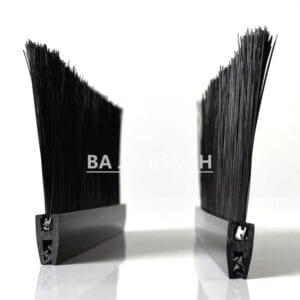
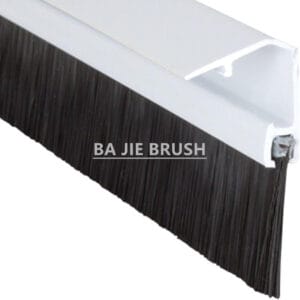
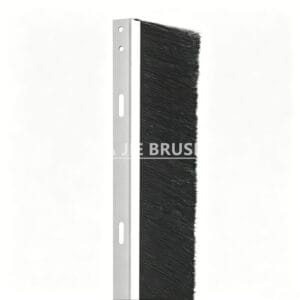
The brush consists of densely filled nylon bristles secured inside a metal channel and fitted into a rigid aluminum mounting profile. Compared with a solid door-bottom seal, the individual filaments can flex over minor surface irregularities and changing floor levels without requiring heavy contact pressure.
Brush length and filament trim height can be selected according to the door width and the size of the gap. Different bristle colors, filament stiffness levels, aluminum profile shapes and surface finishes are also available for different door systems and installation requirements.
Product Features
- Flexible Nylon Bristles – Nylon filaments bend as they move across the floor or threshold, helping the brush maintain contact without creating excessive resistance during door movement.
- Dense Gap Coverage – Closely packed bristles form a continuous barrier beneath the door to help reduce drafts, dust, light debris and insects.
- Trim Height for Different Door Gaps – The filament trim can be produced in different heights to match small or large gaps beneath commercial and industrial doors.
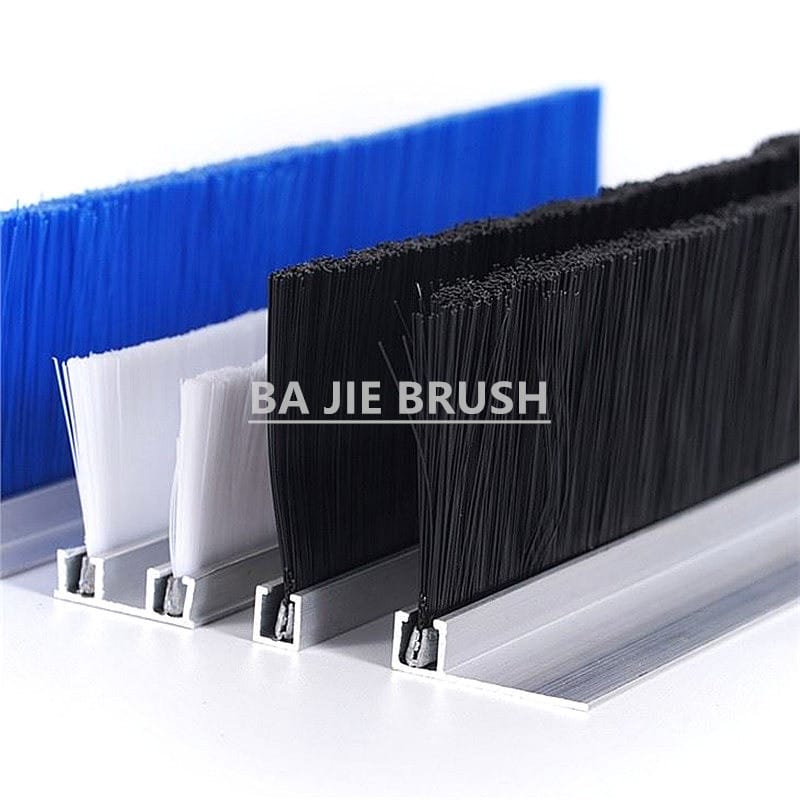
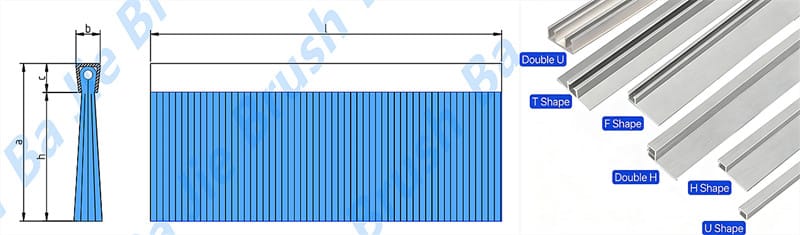
- Multiple Aluminum Profile Designs – Double U, T-shaped, F-shaped, Double H, H-shaped and U-shaped profiles are available for different mounting directions and door structures.
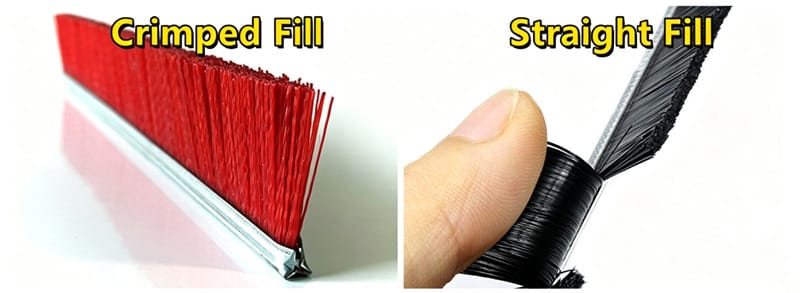
- Straight or Crimped Filaments – Nylon bristles can be supplied in straight or crimped constructions according to the required density, flexibility and appearance.
- Custom Colors and Finishes – Bristle colors and aluminum profile finishes can be selected according to the door design and application requirements.
- Optional Flame-Retardant Nylon – Flame-retardant nylon filaments can be supplied for projects with specific fire-performance requirements. Required standards and certification expectations should be confirmed before production.
Specifications
| Specification | Available Options |
|---|---|
| Product Type | Commercial Nylon Bristle Door Bottom Sweep Brush |
| Main Application | Sealing gaps beneath and around commercial doors |
| Bristle Material | Nylon |
| Bristle Construction | Straight or crimped |
| Bristle Color | Black, white, blue or custom colors |
| Flame-Retardant Option | Available according to specified project requirements |
| Filament Trim Height | Customizable according to the door gap |
| Filament Density | Customizable according to the required sealing contact |
| Aluminum Profile Designs | Double U, T-shaped, F-shaped, Double H, H-shaped and U-shaped |
| Profile Finish | Natural aluminum or anodised finish; other finishes subject to profile availability |
| Metal Channel | Selected to fit the aluminum carrier and required brush dimensions |
| Overall Length | Customizable; some profile designs can be produced up to 6 m |
| Mounting Holes | Pre-drilled holes available with customizable diameter and spacing |
| Fixing Accessories | Screws available upon request |
Nylon Bristle Options
Nylon is commonly selected for door sweep brushes because it combines flexibility with good recovery after repeated bending. The filament diameter, trim height and fill density can be adjusted to achieve lighter contact for smooth door movement or denser contact for improved gap coverage.
Straight Nylon Filaments
Straight filaments create an even, uniform brush line and a clean finished appearance. They are suitable for general door-bottom sealing where consistent contact and controlled flexibility are required.
Crimped Nylon Filaments
Crimped filaments occupy more space within the brush face and can create a fuller barrier at a similar filament weight. They are useful when increased visual density and flexible contact are required across an uneven gap.
Bristle Colors
Black, white and blue are common options, while other colors can be produced according to quantity and material availability. The bristle color can be selected to coordinate with the door, aluminum profile or surrounding installation.
Flame-Retardant Nylon
Flame-retardant nylon is available for projects with specified fire-performance requirements. Because different projects may require different test methods, ratings or certificates, customers should provide the applicable standard before material selection and production.
Nylon can absorb more moisture than polypropylene, so continuous exposure to water, high humidity or chemicals should be considered when selecting the filament. Please provide the working environment if the most suitable material has not yet been determined.
Commercial Door Sweep Applications
Nylon bristle door sweeps can be produced for a range of commercial door systems. The filament trim height, density and stiffness are selected according to the door movement, floor condition and size of the gap.
- Exterior Entry Doors – Dense nylon filaments help cover the space beneath entrance doors and limit the passage of drafts, dust and insects.
- Commercial Facility Doors – Suitable for offices, retail premises, public buildings and service areas where the door is opened frequently.
- Industrial Personnel Doors – Used on access doors in factories, warehouses and workshops where flexible contact is required across the threshold.
- Garage Doors – Longer nylon filaments can be selected for larger gaps or floor surfaces that are not completely level.
- Sliding and Automatic Doors – The filament diameter and contact pressure can be adjusted to reduce unnecessary resistance during repeated door movement.
- Screen Doors – A lightweight nylon brush can cover narrow bottom or edge gaps without using a rigid sealing blade.
- High-Traffic Doorways – Nylon is suitable for applications requiring repeated filament flexing and recovery as the door opens and closes.
For outdoor installations, customers should provide details about sunlight, rain, temperature and moisture exposure so that an appropriate nylon grade and metal component can be selected.
Installation Guide
Correct measurement and positioning are important for effective sealing and smooth door movement.
- Measure the Door Width
Measure the required installation length across the bottom of the door. Allow for any frame, hinge or clearance restrictions at both ends. - Measure the Bottom Gap
Check the distance between the door and the floor or threshold at several points. If the gap is uneven, use the largest and smallest measurements to select an appropriate filament trim height. - Determine the Brush Contact
Position the sweep so that the tips of the nylon filaments maintain continuous contact with the floor without being compressed excessively. Too much compression may increase resistance and cause unnecessary filament wear. - Mark the Mounting Position
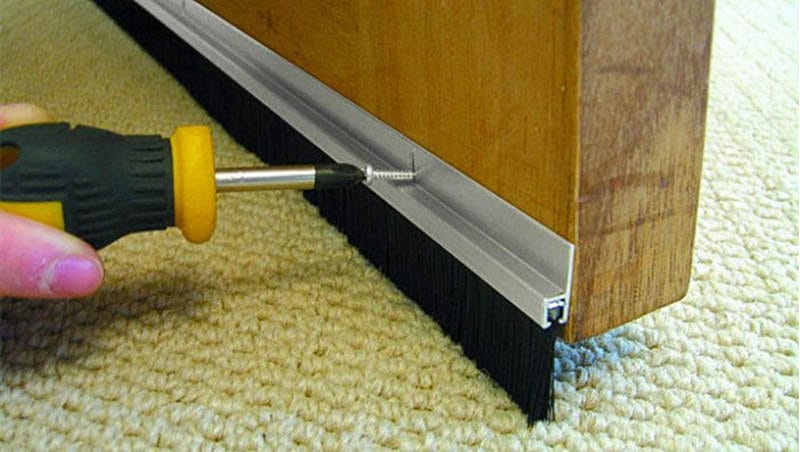
Hold the aluminum profile against the door and mark the fixing points. Confirm that the profile is level before drilling or fastening. - Secure the Aluminum Profile
Fasten the sweep through the pre-drilled mounting holes using suitable screws. If holes are not supplied, select the hole diameter and spacing according to the door material, profile dimensions and chosen fasteners. - Test the Door Movement
Open and close the door several times. Check that the brush maintains contact across the full width and adjust the mounting position if the filaments create excessive drag or leave an uncovered gap.
For custom production, provide the door width, gap measurements, preferred mounting direction and required hole spacing before ordering.
Packing and Shipping
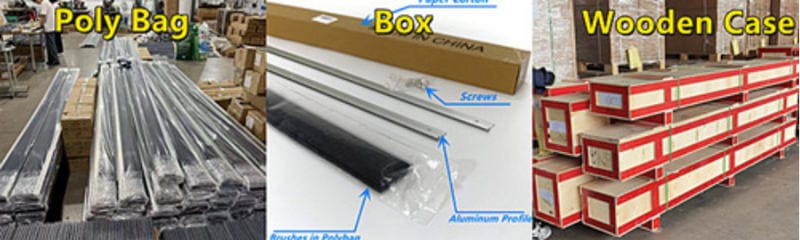
Door sweep brushes require suitable support during transportation because long aluminum profiles can be bent or damaged if they are packed without adequate protection.
Shorter brushes can be individually protected in poly bags and packed in reinforced cartons. Long lengths or larger orders can be secured in wooden cases to reduce movement and impact during handling. Mounting screws and other accessories can be packed separately and clearly labelled when supplied with the brushes.
The final packing method is selected according to the profile length, order quantity and shipping method. Customers with specific carton sizes, labels or pallet requirements should provide the details before production.
Related Door Seal Brushes
For a black anodised aluminum profile, see our Black Anodised Aluminum Door Seal Brush. For concealed mounting screws, consider the Concealed Fix Door Brush Seal.
Frequently Asked Questions
What is the difference between straight and crimped nylon bristles?
Straight nylon filaments create a uniform brush line and controlled contact with the floor. Crimped filaments produce a fuller brush face and can increase visual density. The suitable construction depends on the required flexibility, appearance and gap coverage.
How does nylon compare with polypropylene for a door sweep?
Nylon generally provides better resilience and abrasion resistance, making it suitable for brushes that experience repeated bending and surface contact. Polypropylene absorbs less moisture and may be preferable in some wet or chemically exposed environments.
Can flame-retardant nylon bristles be supplied?
Yes. Flame-retardant nylon can be supplied when the required test method, rating or certification is specified before production. Flame-retardant bristles alone do not certify the complete door or door assembly as fire-rated.
Are different nylon bristle colors available?
Yes. Black, white and blue are common choices, and other colors may be available depending on the required material, filament size and order quantity.
Can the brush contact pressure be adjusted?
Yes. Contact can be adjusted through the filament diameter, trim height, density and installation position. The bristles should cover the gap without being compressed so heavily that they create excessive resistance during door movement.
Can long door sweep brushes be supplied in one piece?
Some aluminum profile designs can be manufactured in lengths up to 6 m. The practical maximum length depends on the selected profile, production requirements, packaging limitations and shipping method. Long brushes can also be supplied in sections when this is more suitable for transportation or installation.