Product Overview
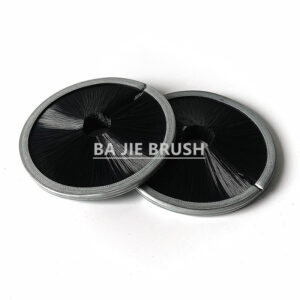
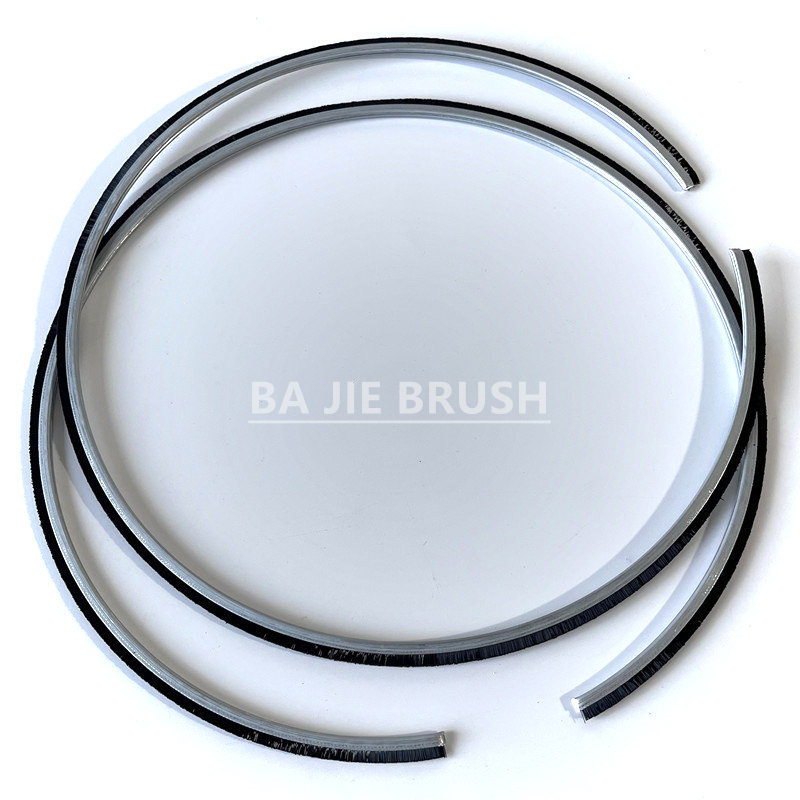
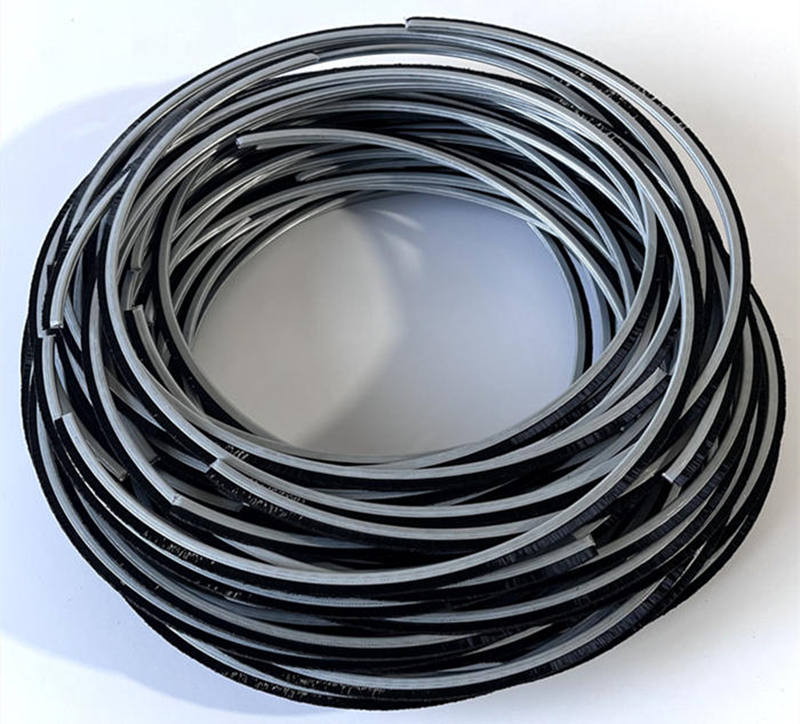
An Outside Disk Brush creates a continuous brushing surface around the outside of a circular metal ring. The bristles project radially outward, allowing the brush to make contact with a surrounding housing, machine opening or other circular surface.
This configuration is particularly useful when a conventional straight strip brush cannot follow a complete circular path. Depending on the filament and the amount of bristle contact, the brush can function as a flexible seal, a wiping element or a circular cleaning brush. Typical installations include rotary tables, drilling equipment and other machinery with annular openings.
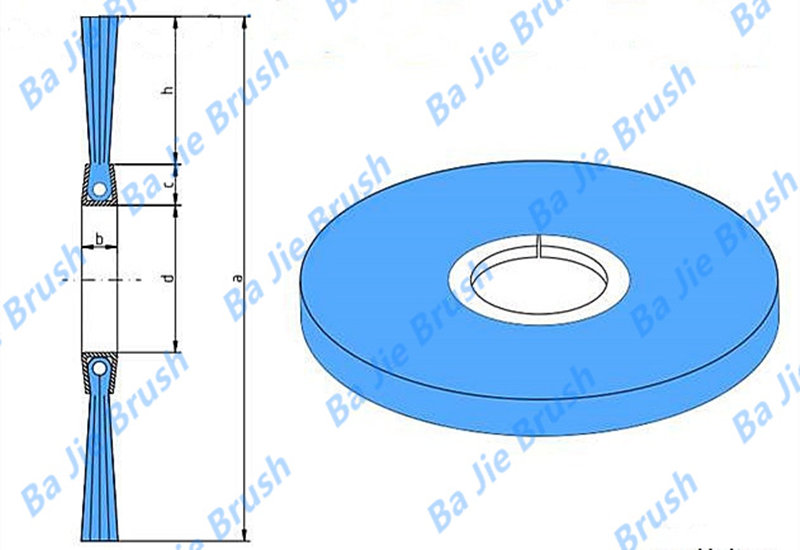
For correct sizing, the most important dimensions are the required outside diameter (a), inside diameter (d) and bristle height (h). Together with the metal backing dimensions, these measurements determine how the brush fits the equipment and how far the outward-facing filaments extend toward the surrounding contact surface.
Circular Sealing & Contact Design
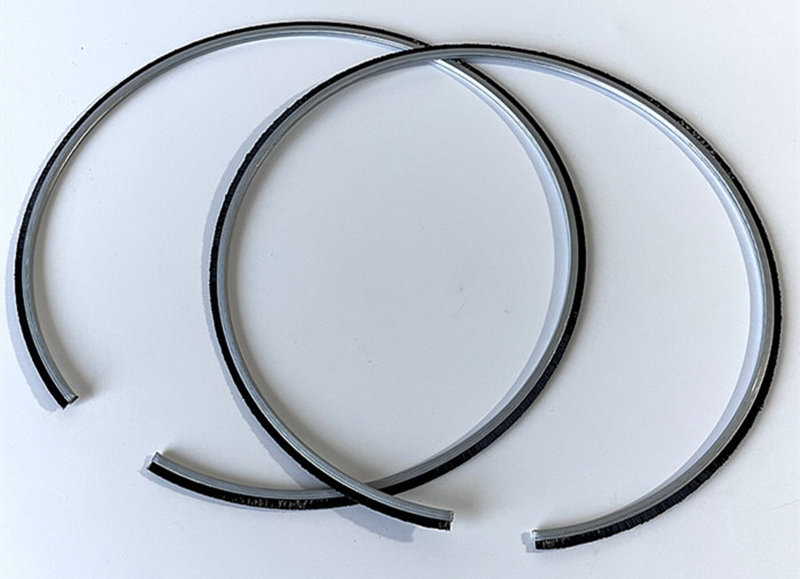
The single-coil external ring construction creates a continuous circular brush line around the outside of the metal backing. Unlike a straight sealing strip, the formed ring can follow an annular opening and maintain bristle contact around the complete circumference.
In sealing applications, the outward-facing filaments can contact the surrounding surface of a machine opening or housing, creating a flexible barrier that helps limit the movement of dust, debris and airflow while still allowing relative movement between components.
The amount of contact can be adjusted through the outside diameter, bristle height and fill density. This makes the design suitable for applications ranging from relatively soft sealing and wiping to firmer circular brushing, depending on the selected filament.
Specifications
| Specification | Available Options |
|---|---|
| Product Type | Outside Disk Brush / External Ring Brush |
| a – Total Outside Diameter | Customizable |
| d – Inside Diameter | Minimum Approx. 8 mm, Customizable |
| b – Backing Width | 2, 3, 4, 5, 6, 7, 8, 10, 12 mm and Custom Sizes |
| c – Backing Height | 2, 3, 4, 5, 6, 7, 8, 10, 12 mm and Custom Sizes |
| h – Bristle Height | Customizable |
| Backing Material | Galvanized Steel / Stainless Steel |
| Bristle Material | Nylon (PA) / Polypropylene (PP) / Animal Hair / Tampico Fiber / Steel Wire / Other Filaments |
| Bristle Color | Black / White / Red / Green / Other Colors |
| Bristle Diameter | Customizable |
| Bristle Direction | Outward-Facing |
| Ring Configuration | Custom Formed According to Drawing, Sample or Application |
Filament Selection by Application
The filament should be selected according to what the outside disk brush needs to do after installation. Sealing against dust or airflow, wiping a surrounding surface and active brushing place different demands on filament flexibility and stiffness.
- Nylon (PA6, PA66, PA612) – A versatile choice for industrial sealing and wiping applications. Different nylon grades can be selected according to the required flexibility, wear resistance and operating conditions.
- Polypropylene (PP) – An economical synthetic filament option for general-purpose sealing and brushing applications.
- Animal Hair or Tampico Fiber – Suitable when a softer, more flexible contact surface is preferred. These natural filaments can be considered for lighter sealing, wiping or applications where aggressive brushing is not required.
- Steel Wire – Provides substantially stiffer contact than synthetic or natural filaments and is better suited to cleaning or brushing applications where stronger mechanical action is required.
Filament diameter, bristle height and fill density can also be adjusted. For circular sealing applications, a denser fill can help reduce open spaces between filaments, while cleaning applications may require a different combination of filament stiffness and contact pressure.
Typical Installation Examples
Outside disk brushes are commonly specified when a brush needs to follow a circular machine opening and make contact toward the surrounding structure. The following are typical installation examples; the actual brush dimensions and filament configuration depend on the equipment design and required function.
- Drilling Rig Chucks – An external ring brush can be installed around a chuck or similar circular assembly to form a flexible barrier around the working area and help limit the entry or escape of dust and debris.
- Rotary Tables – The circular brush can follow the circumference of a rotary table opening where conventional straight strip brushes would be difficult to arrange as a continuous seal.
- Rotating Machinery – Outside disk brushes can be positioned between circular machine components and surrounding housings where flexible contact is required without using a rigid sealing element.
- Industrial Ventilation Systems – The ring configuration can be used around circular openings where the bristles help restrict unwanted airflow and the movement of dust or other lightweight contaminants.
How to Size an Outside Disk Brush
Correct sizing of an outside disk brush depends primarily on the circular opening where the brush is installed and the surface that the outward-facing bristles need to contact. Unlike an inside disk brush, where the center opening and inward contact are usually the key dimensions, an outside disk brush is selected around its external working diameter and available installation space.
- Outside Diameter (a) – This is the total diameter across the tips of the outward-facing bristles. It should be selected according to the surrounding surface the brush needs to contact and the required amount of bristle interference.
- Inside Diameter (d) – This dimension determines the space available inside the metal ring and is particularly important when the brush must fit around a hub, housing or other machine component. The minimum achievable diameter is approximately 8 mm, depending on the brush construction.
- Backing Width (b) – The width of the metal channel affects the mounting space required for the ring. Standard backing sizes are available from 2 to 12 mm, with custom sizes possible.
- Backing Height (c) – This dimension should be considered together with the mounting groove, holder or available installation space. Standard sizes are available from 2 to 12 mm, with custom dimensions available when required.
- Bristle Height (h) – Bristle height determines how far the brush extends outward from the metal ring and therefore directly affects the final outside diameter and contact with the surrounding surface.
For a quotation, customers can provide dimensions a, d, b, c and h, together with the filament material, filament diameter, required quantity and application details. A drawing or existing brush sample is especially useful when the brush must fit an existing machine assembly.
Quality Control
For an outside disk brush, consistent contact around the outer circumference is critical to its sealing or brushing performance. During production, we check the formed ring and outward-facing filament profile to make sure the brush maintains a uniform circular working surface.
Outside diameter (a) and bristle height (h) are checked against the confirmed specifications because variations in these dimensions can change the contact between the brush and the surrounding machine surface. Filament distribution is also inspected around the circumference to identify areas with irregular fill or uneven projection.
The metal channel is checked after forming to ensure that the ring maintains the required shape without excessive distortion. For applications where the brush fits into an existing chuck, rotary table, housing or other circular assembly, key mounting dimensions are verified according to the customer’s drawing or approved sample.
Frequently Asked Questions
Where is an outside disk brush normally installed?
An outside disk brush is normally installed where the bristles need to extend outward from a circular metal ring and contact a surrounding surface. Typical installations include rotary tables, drilling rig chucks, rotating machinery, circular housings and ventilation equipment.
How do I determine the correct outside diameter?
The required outside diameter (a) depends on the diameter of the surrounding surface and the amount of bristle contact required. In many sealing applications, the bristle tips need to contact the surrounding surface with controlled interference rather than simply matching the available opening. Providing an installation drawing is recommended for applications where the fit is critical.
What is the minimum inside diameter of an outside disk brush?
The inside diameter (d) can be manufactured down to approximately 8 mm, depending on the metal channel size, bristle configuration and overall brush construction. For very small diameters, please provide the required dimensions so we can confirm manufacturability.
Can an outside disk brush be used for both sealing and cleaning?
Yes. For sealing applications, softer or denser filaments can create a flexible circular barrier against dust, debris or airflow. For cleaning and wiping applications, the filament material, diameter and density can be selected to provide the required brushing action against the surrounding surface.
What information should I provide for a custom outside disk brush?
Please provide outside diameter (a), inside diameter (d), backing width (b), backing height (c), bristle height (h), filament material, filament diameter and quantity. You can also send us a drawing, photo or existing sample together with information about the machine and intended application.
What is the difference between an outside disk brush and an inside disk brush?
An outside disk brush has bristles facing outward from the ring for contact around an external circumference. An inside disk brush has bristles facing inward toward the center opening for contact around shafts, rods, cables or tubes. For inward-facing applications, see our inside disk brush.