Product Overview
The concrete block machine cleaning brush is designed to remove concrete residue and loose material from molds, tamper heads and material-feeding areas during the production of concrete blocks, hollow blocks, pavers and cement bricks.
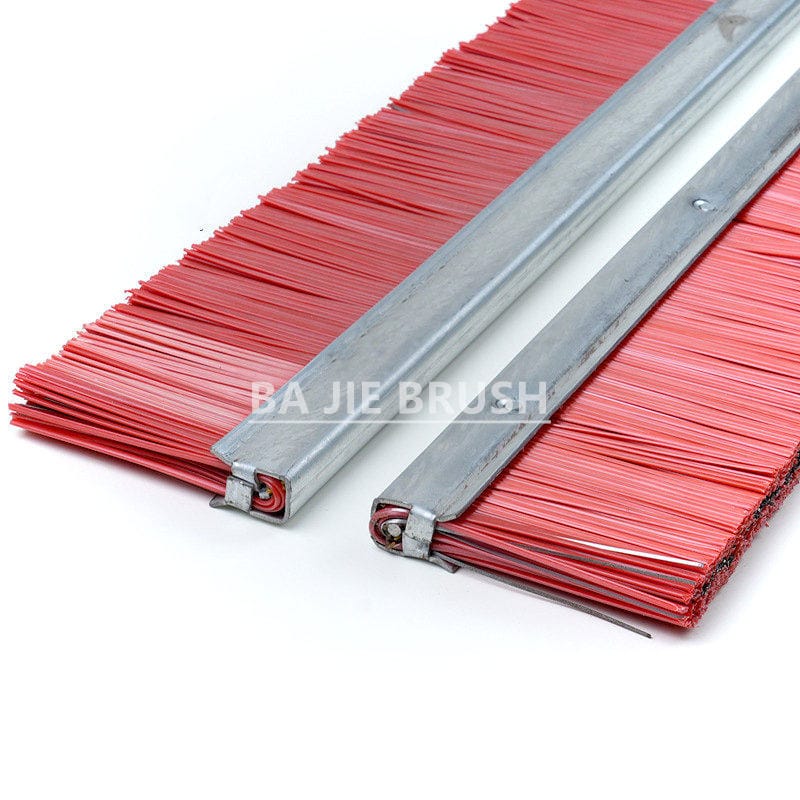
Unlike a standard metal channel strip brush, this product combines red polypropylene filaments with flat steel wire. The polypropylene filaments sweep away loose particles and dust, while the flat steel wire provides additional rigidity for loosening material that is more firmly attached to machine components.
Both materials are secured in a galvanized steel backing to form a long, replaceable cleaning brush for concrete block production equipment. Standard options include 95 mm, 115 mm and 145 mm bristle heights, a 20 × 30 mm backing and overall lengths from 700 to 1500 mm. Other dimensions can be produced according to the machine drawing or an existing brush sample.
Product Features
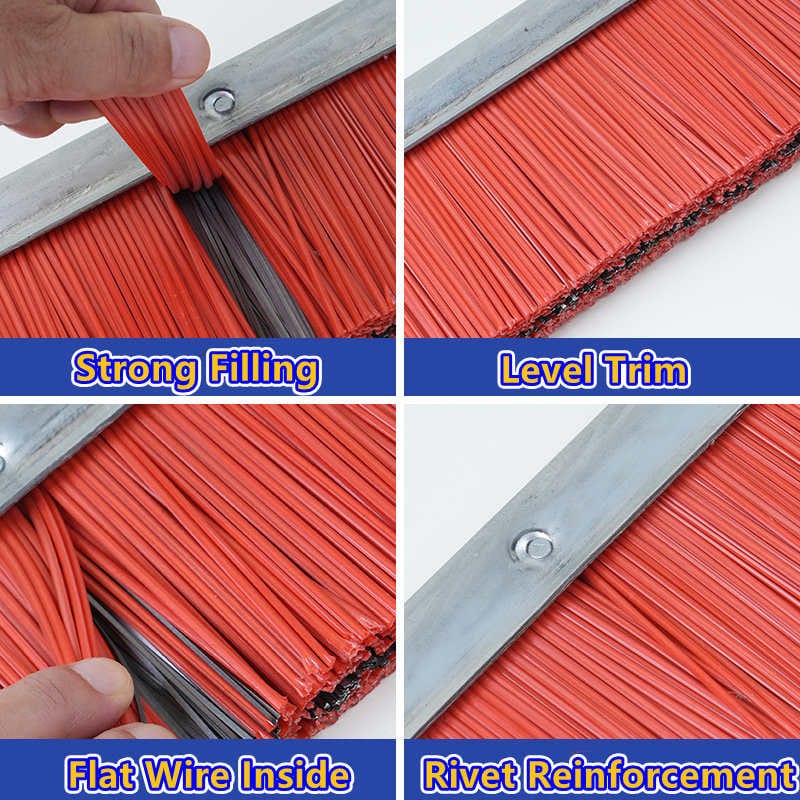
- Mixed Poly and Steel Wire Filling – Red polypropylene filaments and flat steel wire perform different cleaning functions within the same brush face.
- 3 mm Red Polypropylene Filaments – The plastic filaments sweep loose concrete particles, dust and smaller debris away from the cleaning area.
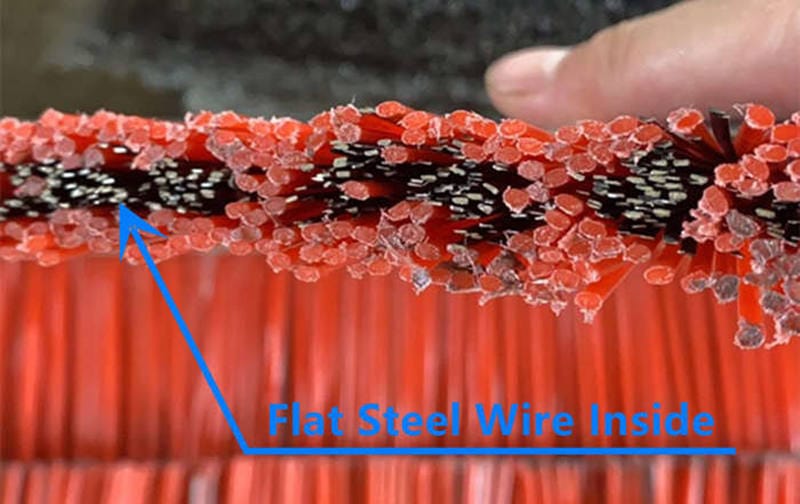
- 2 × 0.3 mm Flat Steel Wire – Flat wire adds rigidity and helps loosen residue that is more difficult for plastic filaments alone to remove.
- Level Bristle Trim – The brush face is trimmed to a consistent height to provide more uniform contact across the mold, tamper head or feeding area.
- 20 × 30 mm Galvanized Steel Backing – The metal backing supports the mixed bristles and provides a stable mounting structure for the machine.
- Rivet Reinforcement – Rivets reinforce the long metal backing and help maintain the brush assembly during repeated machine operation.
- Multiple Working Heights – Standard bristle heights of 95 mm, 115 mm and 145 mm are available for different machine clearances and cleaning positions.
- Custom Machine Fit – Overall length, bristle height, backing dimensions and filling ratio can be produced according to the equipment drawing or existing brush sample.
Why Mix Poly Bristles with Flat Steel Wire?
Concrete residue can range from loose dust to partially hardened material. A brush filled with only one filament type may not provide the most suitable contact for every type of residue. Combining polypropylene filaments with flat steel wire allows the brush face to perform both sweeping and loosening actions.
If Only Plastic Bristles Are Used
Plastic filaments provide flexible contact and are effective for moving loose particles, dust and fresh material. However, they may bend around residue that has begun to harden instead of loosening it from the machine surface.
If Only Steel Wire Is Used
Steel wire provides a more aggressive cleaning action, but an all-wire brush may create unnecessarily harsh contact for some molds and machine components. Wire can also fatigue after repeated flexing, particularly when the brush is installed with excessive pressure or incorrect clearance.
Mixed-Bristle Cleaning Action
In the mixed construction, the flat steel wire helps break contact between stubborn residue and the machine surface. The surrounding polypropylene filaments then sweep the loosened material away from the working area.
This combination allows the cleaning action to be adjusted through the ratio of plastic filaments to flat steel wire. The appropriate ratio depends on the condition of the concrete residue, required contact pressure, machine speed and surface being cleaned.
Why Use Flat Steel Wire Instead of Round Wire?
The 2 × 0.3 mm flat steel wire provides a different contact geometry from conventional round wire. Its wide, thin cross-section is selected to increase the working edge available for loosening concrete residue while maintaining controlled flexibility within the brush face.
Key differences include:
- Wider Contact Area – The flat surface distributes contact across a broader area than a narrow round-wire tip of comparable size.
- Directional Rigidity – The rectangular cross-section provides different stiffness in each bending direction, helping the wire resist unwanted side deflection when correctly oriented in the brush.
- Effective Residue Removal – The wider working edge can loosen partially hardened concrete deposits that flexible polypropylene filaments may pass over.
- More Even Surface Contact – When the correct wire grade, trim height and operating pressure are used, flat wire can provide more even contact across the cleaning area.
Flat steel wire does not guarantee scratch-free operation. Actual cleaning performance and surface wear depend on the wire material, hardness, thickness, edge condition, bristle density, machine speed, installation angle and contact pressure. A sample test is recommended when the mold surface or finish is particularly sensitive.
Specifications
| Specification | Available Options |
|---|---|
| Product Type | Concrete Block Machine Cleaning Brush |
| Brush Construction | Red polypropylene filaments mixed with flat steel wire |
| Polypropylene Filament Diameter | 3 mm |
| Flat Steel Wire Size | 2 × 0.3 mm |
| Backing Material | Galvanized steel |
| Backing Size | 20 × 30 mm |
| Standard Bristle Heights | 95 mm, 115 mm and 145 mm |
| Overall Length | 700–1500 mm |
| Bristle Trim | Level trimmed |
| Backing Reinforcement | Riveted |
| Cleaning Positions | Mold, tamper head and material-feeding area |
| Machine Applications | Concrete blocks, hollow blocks, pavers and cement bricks |
| Custom Production | Available according to machine drawings, dimensions or existing brush samples |
Where the Brush Works in a Concrete Block Machine
The installation position of a concrete block machine cleaning brush varies with the machine design. It is commonly mounted where residual concrete, dust or spilled material must be removed before it interferes with the next production cycle.
Mold Cleaning
Around the mold frame and mold openings, the brush removes loose mix and material left after filling and demolding. Proper bristle height is important: the mixed filling should reach the required surface without creating excessive pressure against the mold.
Tamper Head Cleaning
Concrete mixture may adhere to the lower surface or edges of the tamper head during repeated cycles. Flat steel wire helps loosen attached residue, while the surrounding polypropylene filaments carry the loosened particles away. The brush position and working clearance should match the tamper-head movement.
Material-Feeding Area Cleaning
The brush can also be installed near the feeding drawer, production table or adjacent material-contact areas. In these positions, it sweeps away spilled concrete mixture and helps prevent loose material from accumulating along the machine path.
Matching the Brush to the Machine
Mounting arrangements differ between concrete block machines. Before production, please provide the machine model, required brush length, backing dimensions, bristle height and mounting-hole positions. A technical drawing or an existing brush sample is recommended when an exact replacement is required.
Production and Quality Control
Producing a long mixed-bristle brush requires consistent control of both the filament distribution and the metal backing. Uneven filling may create weak cleaning areas, while an inconsistent trim can prevent the brush from contacting the machine surface uniformly.
During production, the following points are checked:
- Bristle Distribution – Red polypropylene filaments and flat steel wire are distributed along the brush according to the specified filling ratio.
- Filling Strength – The bristles are mechanically secured inside the galvanized steel backing to reduce movement or pull-out during operation.
- Trim Consistency – The brush face is trimmed to the required working height and checked for obvious high or low sections.
- Backing Dimensions – The backing width, height and overall length are checked against the order specifications or technical drawing.
- Rivet Positioning – Rivets are installed at suitable intervals to reinforce the long backing without interfering with the mounting arrangement.
- Final Inspection – Bristle height, brush length, backing condition and general appearance are inspected before packaging.
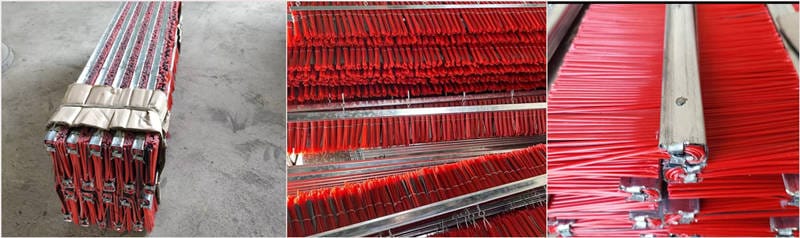
Batch production is available for replacement and maintenance programs. To improve dimensional consistency between orders, customers are encouraged to provide the original machine drawing, an approved brush sample or the specifications from a previous order.
How to Specify a Replacement Brush
Concrete block machines use different brush lengths, mounting arrangements and working clearances. To manufacture a replacement brush that fits the existing equipment, please provide the following information:
- Installation Position – Indicate whether the brush cleans the mold, tamper head, material-feeding area or another machine component.
- Overall Length – Measure the complete end-to-end length of the existing brush backing.
- Backing Dimensions – Confirm the width and height of the galvanized steel backing. The standard option for this product is 20 × 30 mm.
- Bristle Height – Measure from the edge of the metal backing to the tip of the bristles. Standard heights include 95 mm, 115 mm and 145 mm.
- Mounting Details – Provide the number, diameter and centre-to-centre spacing of mounting holes or rivet positions where relevant.
- Bristle Mixture – Specify the preferred ratio of red polypropylene filaments to flat steel wire. More steel wire creates a more aggressive cleaning action, while a higher proportion of polypropylene provides more flexible sweeping contact.
- Operating Conditions – Describe the condition of the concrete residue, machine speed, cleaning frequency and any previous problems such as insufficient cleaning, rapid bristle wear or mold marking.
A dimensioned drawing is preferred for a new machine configuration. For direct replacement, clear photographs and an existing brush sample can also be used to confirm the construction.
Frequently Asked Questions
What parts of a concrete block machine can this brush clean?
The brush is commonly installed around molds, tamper heads and material-feeding areas. The exact mounting position depends on the machine design and where concrete residue accumulates during production.
Why are polypropylene filaments mixed with flat steel wire?
The two materials perform complementary functions. Flat steel wire helps loosen attached or partially hardened concrete residue, while polypropylene filaments sweep the loosened particles and dust away from the cleaning area.
Can the ratio of polypropylene to steel wire be changed?
Yes. The filling ratio can be adjusted according to the required cleaning action. A higher proportion of flat steel wire provides more aggressive contact, while additional polypropylene creates a more flexible sweeping action. Samples may be required to determine the appropriate mixture for a new application.
Will the flat steel wire scratch the mold surface?
Surface marking depends on the wire material, edge condition, trim height, installation angle, machine speed and contact pressure. The brush should not be installed with unnecessary compression. A trial installation is recommended for sensitive or specially finished mold surfaces.
Which bristle height should I select?
Standard bristle heights are 95 mm, 115 mm and 145 mm. The correct height depends on the distance between the mounting position and the surface being cleaned. The bristles should maintain effective contact without excessive bending.
Can you manufacture a replacement from an existing brush?
Yes. An existing sample, dimensioned drawing or clear photographs with measurements can be used as a reference. Please include the overall length, backing dimensions, bristle height, mounting details and preferred mixed-filling arrangement.
Can the brush length and steel backing be customized?
Yes. The standard overall length range is 700–1500 mm, with a 20 × 30 mm galvanized steel backing. Other dimensions can be evaluated according to the machine structure, required quantity and production feasibility.