Nylon vs polypropylene strip brushes differ mainly in wear resistance, moisture absorption, chemical resistance, temperature capability, flexibility and cost. Although the two filament materials can look similar, they perform differently under actual operating conditions.
In general, nylon strip brushes provide better wear resistance and elastic recovery, while polypropylene strip brushes offer lower moisture absorption, good chemical resistance and a lower material cost. The correct choice depends on the working environment rather than appearance alone.
If you are unfamiliar with strip brush construction, first read our guide: What Is a Strip Brush? Types, Materials and Industrial Applications.
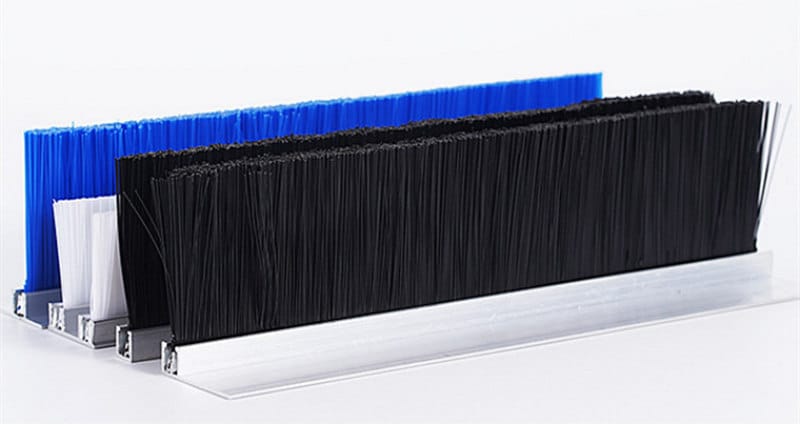
Nylon vs Polypropylene Strip Brushes at a Glance
| Property | Nylon Filament | Polypropylene Filament |
|---|---|---|
| Wear resistance | Generally higher | Suitable for light and moderate contact |
| Elastic recovery | Better after repeated bending | Lower recovery under repeated loading |
| Moisture absorption | Absorbs more moisture | Very low moisture absorption |
| Chemical resistance | Depends on nylon grade and chemical | Generally good against many acids and alkalis |
| Heat resistance | Usually higher | Lower; softens sooner at elevated temperatures |
| Filament stiffness | Available in multiple diameters and grades | Commonly suitable for economical sealing |
| Cost | Higher | Lower |
| Typical use | Repeated contact, wiping and moving equipment | Wet areas, chemical environments and general sealing |
When choosing nylon vs polypropylene strip brushes, the working environment matters more than appearance or initial material cost. BaJie Brush can recommend a suitable filament grade and brush construction based on your drawing, sample or operating conditions.
Wear Resistance and Flexibility
Nylon is usually the better option where bristles repeatedly contact a moving surface. It offers good abrasion resistance and tends to recover more effectively after bending, helping the brush maintain contact over repeated operating cycles.
Typical applications include:
- Conveyor cleaning and product guidance
- Frequently operated door seals
- Machine wiping and cleaning
- Equipment with repeated moving contact
- Applications requiring flexible bristles with good recovery
Polypropylene can still perform well in light-duty sealing and dust-control applications. However, it normally wears faster than nylon under continuous friction.
Moisture Absorption
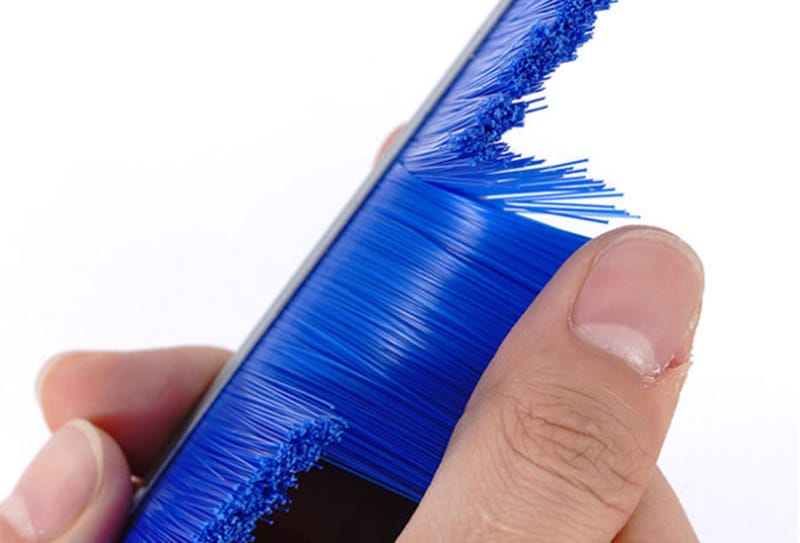
Polypropylene absorbs very little water, making it suitable for wet, humid or frequently washed environments. Its dimensions and weight remain relatively stable after exposure to moisture.
Nylon absorbs more moisture than polypropylene. The amount varies by nylon grade, with PA6 and PA66 generally absorbing more than PA610 or PA612. Moisture can affect filament stiffness and dimensional stability, so the exact nylon grade should be considered when a brush operates continuously in water or high humidity.
Choose polypropylene when minimal water absorption is the main requirement. Choose an appropriate nylon grade when wear resistance and elastic recovery remain more important.
Temperature Resistance
Nylon generally tolerates higher operating temperatures than polypropylene, but there is no single temperature limit that applies to every nylon strip brush.
Temperature capability depends on:
- Nylon grade, such as PA6, PA66, PA610 or PA612
- Continuous or intermittent exposure
- Mechanical load on the filament
- Chemicals present in the environment
- Required service life
Polypropylene is more likely to soften and lose stiffness as temperature rises. For elevated-temperature applications, provide the normal and maximum working temperatures before selecting the filament.
Neither standard nylon nor polypropylene should automatically be specified for very high-temperature service without confirming the material grade.
Chemical Resistance
Polypropylene generally provides good resistance to many acids, alkalis and cleaning chemicals. This makes it a practical choice for chemical processing, wet cleaning and environments where the brush may contact corrosive liquids.
Nylon also resists many oils, solvents and mild chemicals, but its performance varies according to nylon grade and the substance involved. Some acids and other aggressive chemicals can reduce its strength or shorten service life.
Before ordering a chemically exposed brush, provide:
- Chemical name
- Concentration
- Working temperature
- Contact duration
- Cleaning or immersion conditions
These details are more reliable than choosing a material from a general chemical-resistance description.
Cost Difference
Polypropylene is normally more economical than nylon. It is often selected for long sealing strips, general dust barriers and high-volume applications where severe abrasion is not expected.
Nylon costs more but may provide better value in applications involving frequent movement or friction because of its wear resistance and recovery after bending.
The lowest initial price does not always produce the lowest operating cost. Replacement frequency and equipment downtime should also be considered.
Typical Applications
When to Choose a Nylon Strip Brush
Nylon is commonly selected for:
- Repeated wiping or cleaning
- Conveyor and product-guiding systems
- Frequently moving doors or machine components
- Applications requiring good filament recovery
- Moderate-temperature industrial environments
Our metal channel strip brushes can be manufactured with different nylon grades, filament diameters and trim heights.
When to Choose a Polypropylene Strip Brush
Polypropylene is commonly selected for:
- Wet and humid environments
- General dust and debris sealing
- Contact with compatible acids or alkalis
- Light-duty door and enclosure seals
- Cost-sensitive, high-volume applications
For curved or irregular mounting paths, polypropylene can also be used in selected flexible strip brush constructions.
Can You Identify Nylon and Polypropylene by Appearance?
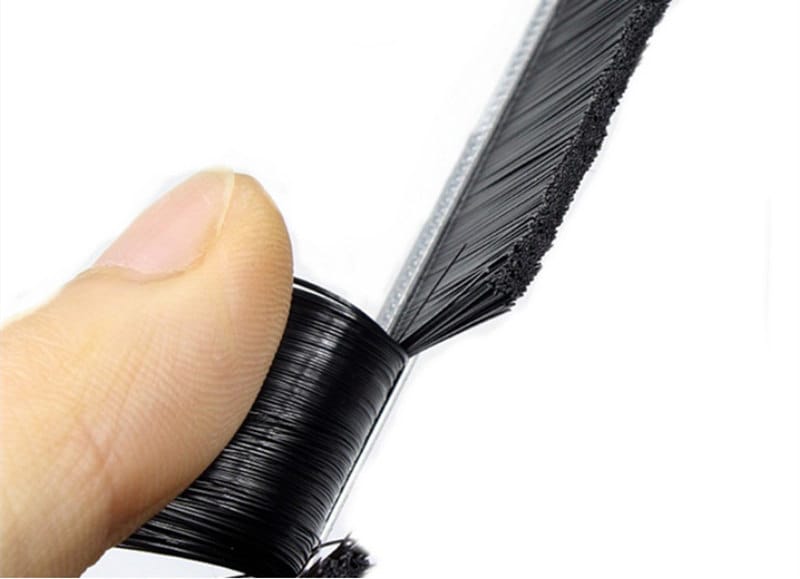
Appearance alone is not a reliable identification method. Both materials can be manufactured in similar colors, diameters and surface finishes.
A bending comparison may provide an initial indication: nylon commonly shows better recovery, while polypropylene may retain a more visible bend. However, filament diameter, production process and material formulation can change the result.
For accurate identification, use:
- Supplier material records
- Filament specifications or certificates
- Density or laboratory material testing
- A confirmed sample from the brush manufacturer
A burning test is not recommended as the primary identification method. Burning plastic can release irritating fumes, and flame appearance alone does not provide dependable material verification.
Information Needed to Select the Filament
To choose between nylon and polypropylene, provide:
- Brush function: sealing, cleaning, wiping or guiding
- Wet or dry working conditions
- Chemical exposure
- Normal and maximum temperature
- Contact pressure and operating frequency
- Required brush dimensions
- Expected service life
BaJie Brush manufactures custom strip brushes with nylon, polypropylene and other filament materials. Send us your drawing, sample or operating conditions, and we can recommend a suitable filament grade and brush construction.