Long strip brush packaging must protect two very different parts of the product: the rigid backing and the comparatively flexible filaments. If the package bends during handling, the metal or plastic backing may be permanently deformed. If the brushes move inside the package, the filaments can become folded, crushed or uneven.
The appropriate method depends on brush length, backing material, filament type, order quantity and shipping method. This guide explains how we pack both standard and extended-length strip brushes for road, air and sea transportation.
For an introduction to the different constructions, see What Is a Strip Brush? Types, Materials and Industrial Applications.
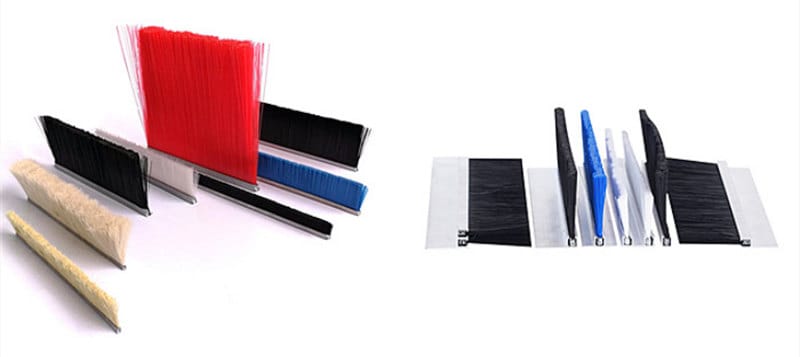
Packaging Standard-Length Strip Brushes
Strip brushes measuring approximately 900 mm or 1 metre can normally be packed in appropriately sized corrugated cartons, provided the total weight and backing stiffness are suitable.
A typical packing process includes:
- Inspecting the brush dimensions and backing straightness
- Placing the brushes in a polyethylene bag
- Protecting aluminum holders or exposed metal edges
- Adding internal spacers to prevent sliding
- Filling excessive empty space without compressing the bristles
- Sealing and labelling the outer carton
Accessories such as screws can be packed in a separate sealed bag so they do not scratch the holder or become caught in the filaments.
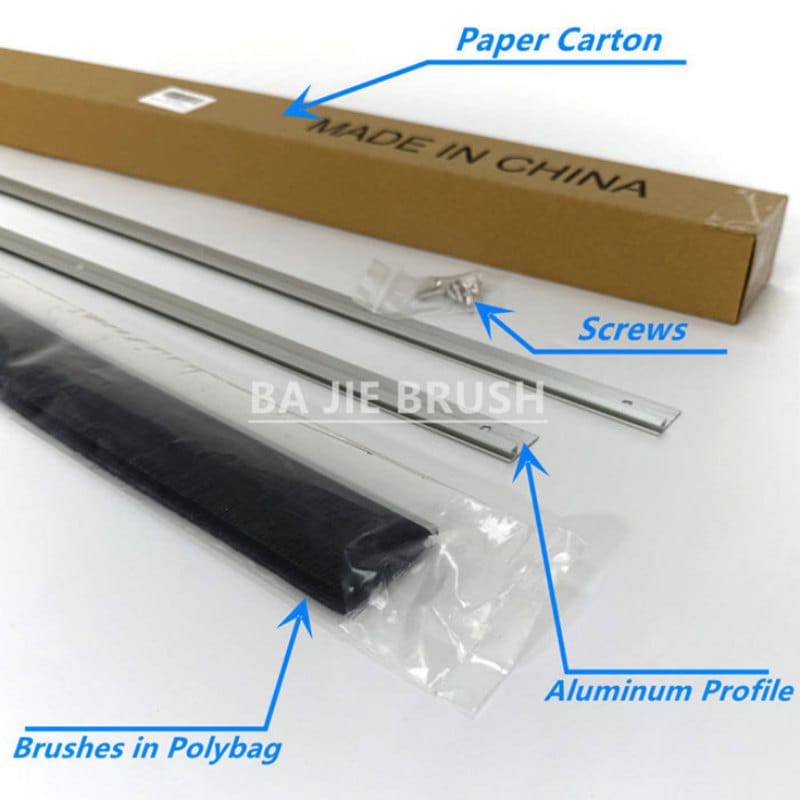
Cardboard packaging is economical and easy to handle, but the carton must be selected according to the packed weight. A long, lightly constructed carton may bend even when the brushes inside are relatively rigid.
Why Long Strip Brushes Need Additional Support
Strip brushes measuring 2, 3 or 6 metres create a larger bending moment during lifting and transportation. Damage can occur even if the package is dropped only a short distance or supported at one end.
The principal risks include:
- Bending of the metal backing or aluminum holder
- Cracking or distortion of a rigid plastic profile
- Permanent folding of the filaments
- Movement and friction between adjacent brushes
- Damage caused by forklift handling
- Moisture exposure during long-distance shipping
- Packages being stacked under unsuitable loads
Long packages should therefore resist bending and hold the brushes in a fixed position without applying excessive pressure to the filaments.
Choosing the Outer Package
Heavy-Duty Carton
A reinforced carton may be suitable for moderately long, lightweight brushes shipped in small quantities. Internal boards, rigid supports or suitable profiles should extend along the brush length to help resist bending.
This option is normally most practical for air freight, express delivery or shorter transport routes where package handling can be controlled.
Reinforced Wooden Crate
For very long, heavy or high-value strip brushes, a custom wooden crate usually provides better structural protection.
The crate should include:
- Panels and framing suitable for the total load
- Continuous support beneath the packed brushes
- Internal blocks that prevent longitudinal and sideways movement
- Reinforced ends
- Securely fastened joints
- Strapping where required
- Proper lifting clearance or forklift entry points
- Clear handling and stacking labels
The crate dimensions should be based on the actual brush bundle rather than leaving unnecessary internal space.
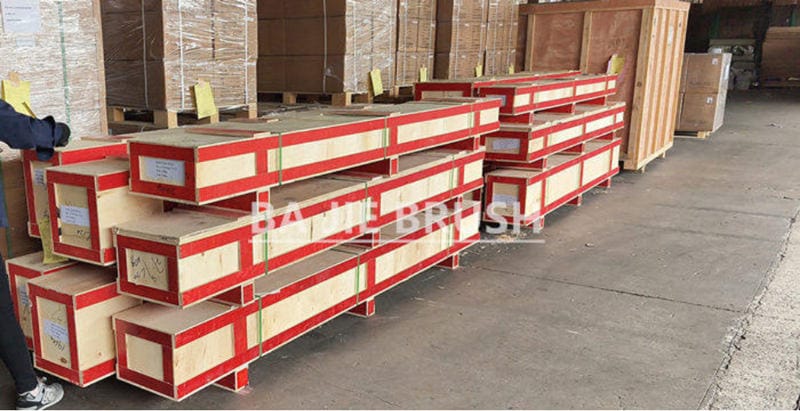
For international shipments, solid-wood packaging components may be subject to ISPM 15 treatment and marking requirements. Packaging made wholly from processed wood such as plywood may be exempt, but solid-wood battens, blocks or feet can bring the package within the standard. Confirm the destination-country requirements with the packing supplier or freight forwarder before shipment. The official standard is available from the International Plant Protection Convention.
How to Secure Brushes Inside the Package
A strong outer crate cannot protect the brushes if they are free to slide or strike one another. Internal packing should immobilize the bundle while avoiding direct compression of the bristles.
Step 1: Arrange the Brushes
Where the brush construction permits, alternate the orientation of adjacent brushes to reduce unused space and distribute the load more evenly.
The number of brushes in each layer depends on:
- Backing width
- Filament height
- Brush length
- Backing rigidity
- Total package weight
Do not force too many brushes into one layer. Excessive side pressure can deform the filaments before the package is shipped.
Step 2: Protect the Bundle
Place the arranged brushes inside a clean polyethylene bag or protective sleeve. This keeps dust away from the filaments and prevents loose accessories from entering the brush face.
For sea freight or humid routes, moisture-sensitive metal components may require suitable desiccants, corrosion protection or sealed barrier packaging. A basic polyethylene bag alone should not be described as complete moisture protection because condensation can still form inside it.
Step 3: Stabilize the Packed Brushes
Secure the outside of the bag or wrapped bundle at the ends and at appropriate intermediate points.
Tape or straps should:
- Hold the bundle together
- Remain outside the protective wrapping
- Avoid direct adhesive contact with the filaments
- Avoid crushing or permanently bending the brush face
- Be removable without damaging the product
Step 4: Block Movement Inside the Crate
Place the bundle onto continuous supports and add blocks or spacers at the sides and ends. The supports should contact the backing, holder or protected bundle rather than applying concentrated pressure to the filaments.
After closing the package, there should be no significant longitudinal or sideways movement.

Final Inspection Before Shipment
Before releasing the package, check:
- Brush quantity and dimensions against the packing list
- Backings and holders remain straight
- Bristles are not trapped against sharp edges
- Accessories are separately secured
- Bundles cannot move inside the package
- Crate ends and lifting points are reinforced
- Package weight and centre of gravity are marked where necessary
- Export wood packaging complies with destination requirements
- Photos are taken before and after closing the package
Photographic records are particularly useful for custom products because they document the condition and packing arrangement before shipment.
Selecting Packaging for the Order
There is no single package suitable for every strip brush. A 1-metre lightweight nylon door brush may only require a carton, while a 6-metre metal-backed brush may require a reinforced crate with continuous internal support.
Before selecting the packaging, confirm:
- Brush length and quantity
- Backing or holder material
- Filament height and sensitivity
- Total package weight
- Air, sea, express or road transport
- Destination-country wood packaging rules
- Required lifting and unloading method
BaJie Brush manufactures metal channel strip brushes in standard and custom lengths. Packaging can be planned according to the brush construction, shipment quantity and transport route so that the products arrive straight, clean and ready for installation or cutting.