Dry ski slope material is an artificial skiing surface designed for locations where natural snow is unavailable, unreliable or limited to a short season. It allows ski resorts, training centers and recreational facilities to offer skiing and snowboarding throughout more of the year.
Brush-based dry slope surfaces are made from densely arranged synthetic bristles. The bristles support the skis while providing a consistent surface for gliding, turning and practicing basic skiing techniques.
How Is Brush-Based Dry Ski Slope Material Made?
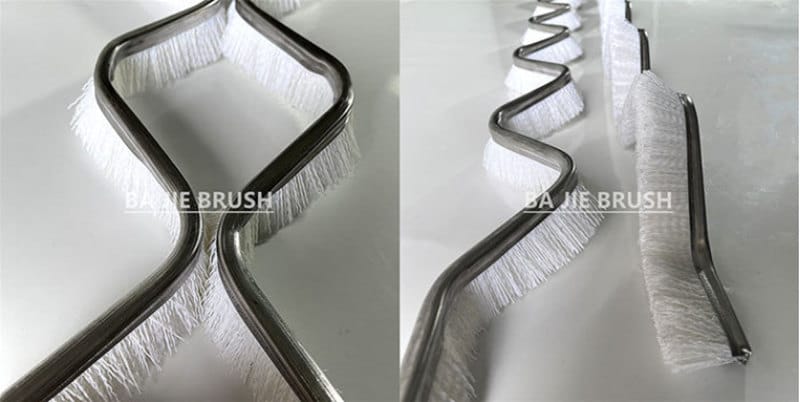
A brush-based dry ski slope surface is assembled from multiple curved metal channel strip brushes. Each strip consists of:
- UV-resistant PBT bristles
- A stainless steel channel base
- A curved or wave-shaped structure
- Smooth, rounded contact areas
The formed brush strips are connected with stainless steel wires to create a flexible diamond-pattern mat. This construction allows the mat to follow the slope surface while keeping the brush elements securely positioned.
A standard mat contains approximately 16 formed brush strips. Its physical dimensions are approximately 1.90 × 1.07 meters, while the effective installed coverage is approximately 1.82 × 1.07 meters because adjacent mats overlap during installation.
How Does Dry Ski Slope Material Work?
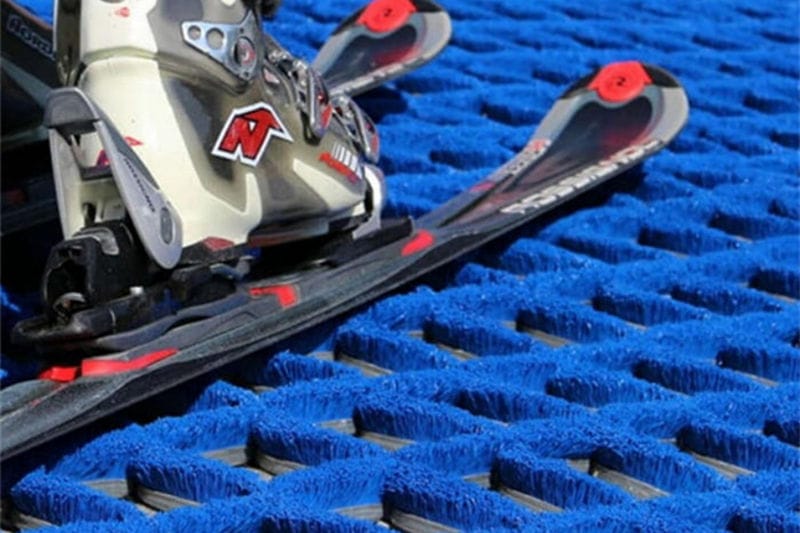
The dense PBT bristles create a supportive surface underneath the skis or snowboard. Their flexibility helps the surface respond to movement, while the spaces between the brush elements support drainage and reduce the accumulation of debris.
The diamond-pattern arrangement also makes it possible to connect multiple mats over a larger slope. Individual mats can be removed and replaced when maintenance is required, without replacing the entire skiing surface.
Key Features of Dry Ski Slope Material
Year-Round Skiing
Artificial slope material allows skiing activities to continue in warm or snowless regions. It can be used for seasonal extensions, beginner training and recreational skiing.
UV- and Weather-Resistant Construction
PBT bristles can be UV stabilized for prolonged outdoor use. Stainless steel channels and connecting wires provide corrosion resistance and structural support.
Consistent Skiing Surface
Dense, flexible bristles provide stable support for skis and snowboards. Rounded construction and properly installed mats help create a smoother transition between adjoining sections.
Modular Installation and Maintenance
Individual mats can be connected to build slopes of different sizes and configurations. Damaged or worn sections can also be replaced separately, reducing long-term maintenance work.
Where Is Dry Ski Slope Material Used?
Brush-based dry slope surfaces can be used for:
- Outdoor dry ski slopes
- Indoor ski training centers
- Beginner skiing and snowboarding areas
- Recreational parks
- Existing slope refurbishment
- Dendix-style surface replacement projects
The surface can be supplied in different bristle colors and specifications to match the slope design, installation system and operating environment.
How to Choose the Right Dry Ski Slope Material
Before ordering artificial ski slope material, consider the following factors:
- Dimensions of the existing slope or replacement mat
- Required bristle height, density and color
- Compatibility with the current fixing system
- Indoor or outdoor operating conditions
- Foundation and drainage design
- Whether full mats or individual replacement strips are required
For replacement projects, drawings, photographs and measurements of the existing surface can help the manufacturer confirm compatibility before production.
Learn More About Our Dry Ski Slope Surface
BaJie Brush manufactures brush-based dry ski slope mats using UV-resistant PBT bristles and stainless steel channel strips. Standard and customized specifications are available for new installations and replacement projects.
View the specifications and customization options for our artificial dry ski slope surface with PBT bristles.