Product Overview
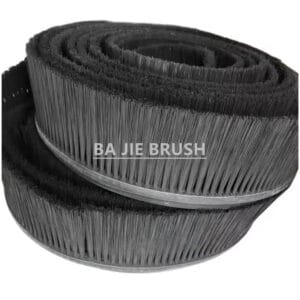
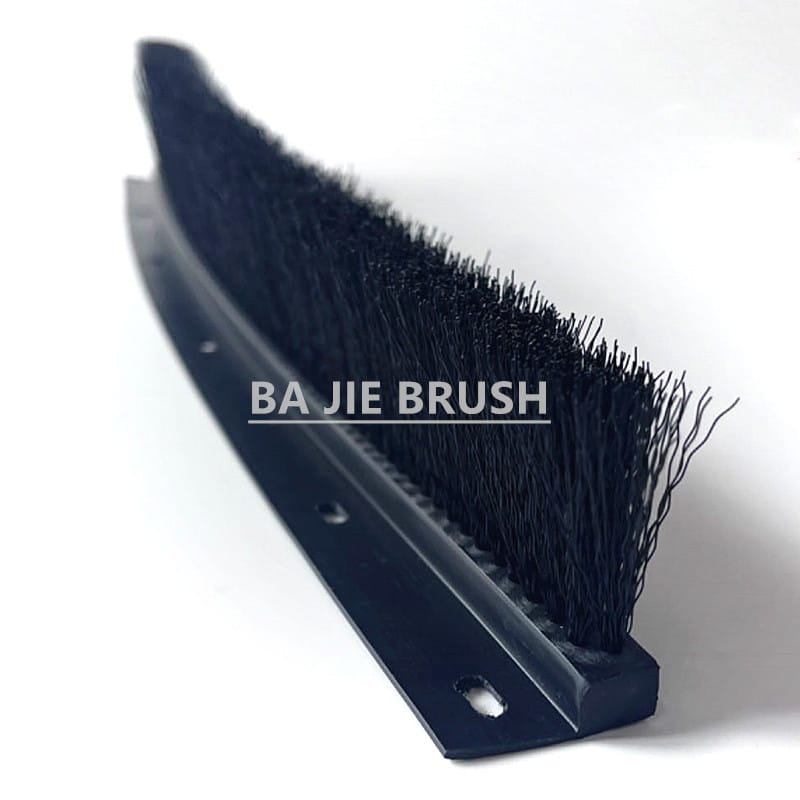
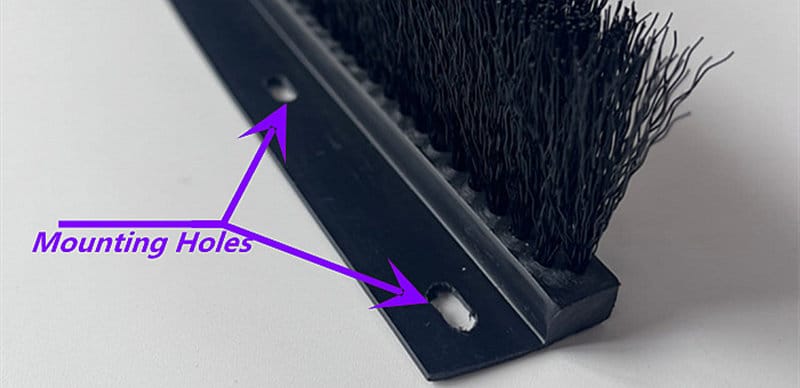
This agricultural machinery brush seal uses a flexible TPE or TPV backing with nylon bristles tufted directly into the profile. Unlike a clip-on edge profile, its preformed mounting holes allow the brush to be fastened to a machine guard, cover or frame.
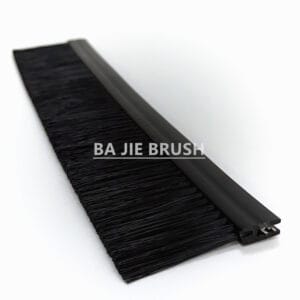
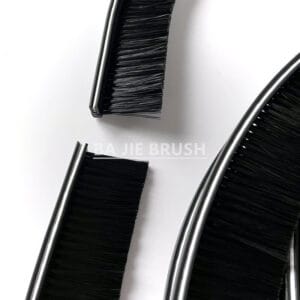
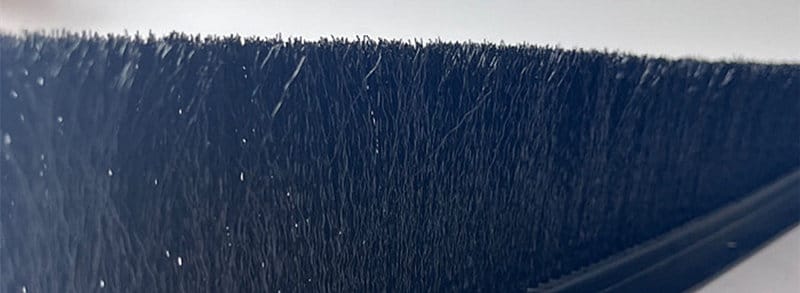
The backing can be produced in a 90-degree F profile or 180-degree H profile to suit different mounting directions. Dual rows of 0.28–0.34 mm corrugated nylon bristles are commonly used to create overlapping coverage against crop residue, dust and liquid splash while the flexible profile follows straight or curved equipment edges.
Product Features
- H and F Mounting Profiles: The 180-degree H profile and 90-degree F profile provide different brush orientations for equipment guards, covers and frames.
- Preformed Mounting Holes: Hole positions can be produced to match the machinery mounting pattern, avoiding a separate metal brush holder.
- Flexible TPE/TPV Backing: The thermoplastic rubber profile withstands repeated bending and can be selected according to operating temperature, oil and chemical exposure.
- Corrugated Nylon Filaments: Common filament diameters range from 0.28 to 0.34 mm. The crimped shape improves coverage compared with the same amount of straight filament.
- Dual-Row Tufting: Two bristle rows are commonly used where closer obstruction of crop residue, dust or splash is required.
Specifications
| Specification | Available Options |
|---|---|
| Backing Material | TPE or TPV |
| Common TPV Grade | Sarlink 4190 or material selected for the application |
| Profile Geometry | 180° H profile or 90° F profile |
| Profile Dimensions | Custom |
| Mounting Holes | Hole size, spacing and position made to the installation drawing |
| Filament Material | Corrugated nylon |
| Filament Diameter | 0.28–0.34 mm commonly used |
| Bristle Rows | Typically two rows; other arrangements available |
| Overall Dimensions | Length, profile size and filament height customized |
Customization and Selection
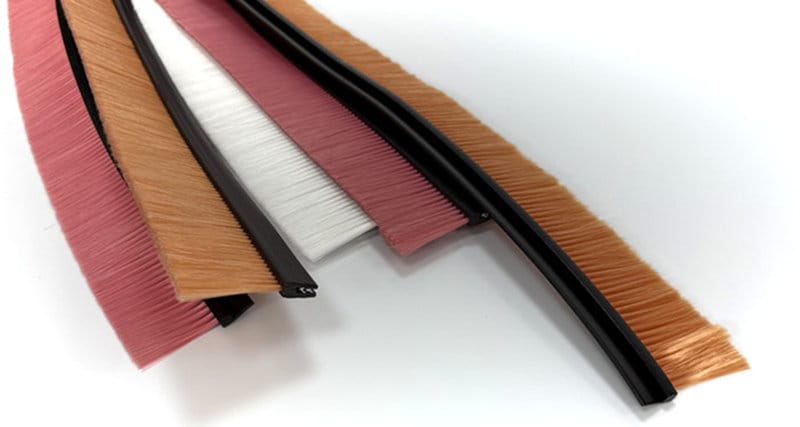
Profile geometry, overall length, filament height, bristle density and mounting-hole pattern can be produced from a drawing or physical sample. Backing and filament colors can also be selected where color identification or equipment matching is required.
For a replacement brush, provide the profile cross-section, total length, hole diameter, hole-center spacing and bristle projection. Operating temperature and exposure to oil, chemicals or outdoor weather should also be stated so that a suitable TPE or TPV compound can be selected. For panel edges that require a clip-on base without drilled mounting holes, see our Flexible Clip-On Rubber Profile Strip Brush.
Applications in Agricultural Machinery
The flexible backing and drilled mounting profile suit agricultural equipment where the brush must follow a machine edge while forming a replaceable barrier. Typical uses include:
- Splash containment around agricultural sprayers and machine guards
- Crop residue barriers on harvesting equipment
- Dust and dirt exclusion around machinery covers
- Seed cleaning and sorting equipment
- Surface wiping on agricultural production machinery
Frequently Asked Questions
What is the difference between the H profile and F profile?
The F profile provides a 90-degree mounting geometry, while the H profile provides a straight 180-degree arrangement. The correct version depends on the position of the mounting surface and the required bristle direction.
Should I choose a TPE or TPV backing?
The backing material should be selected according to operating temperature, repeated flexing, outdoor exposure and contact with oil or chemicals. Sarlink 4190 is one TPV grade commonly used, but it is not the only available material.
Why are corrugated nylon bristles used?
Corrugated filaments spread and overlap more than straight filaments of the same diameter. This helps cover small gaps when the brush is used to block dust, crop residue or liquid splash.
Can the mounting holes be matched to existing equipment?
Yes. Hole diameter, spacing and position can be produced from the machinery drawing or an existing brush sample.
What information is needed for a quotation?
Please provide the profile cross-section, overall length, filament height and diameter, mounting-hole dimensions, quantity and operating conditions. A drawing or sample is recommended for replacement brushes.